
Patient Selection in Partial Knee Arthoplasty
A case that highlights one of the most important principles in knee arthroplasty: patient selection matters.
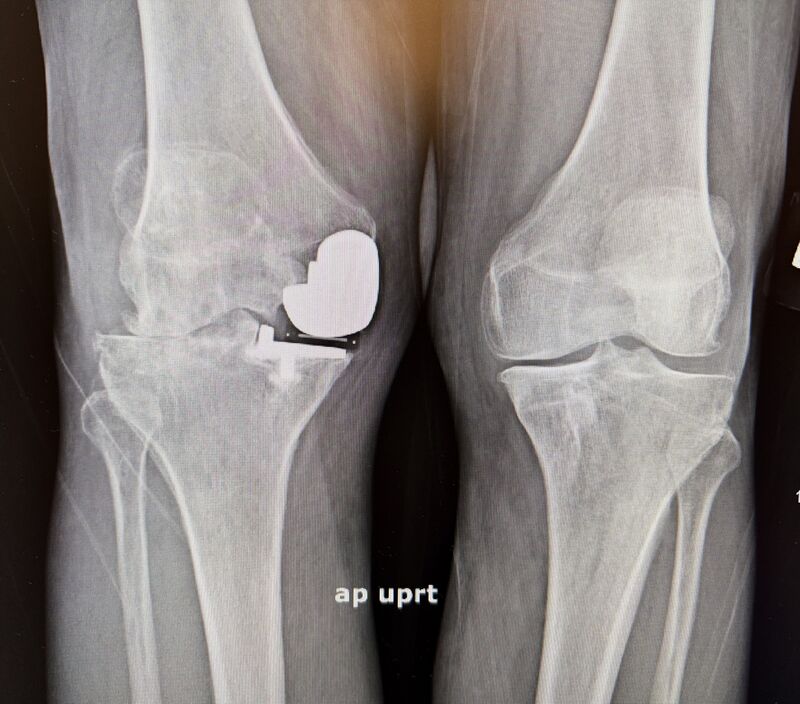
I recently treated a 60-year-old male who presented one year after a medial unicompartmental (partial) knee replacement performed elsewhere. He continued to have significant pain and functional limitation.
On evaluation, he had “progressive” arthritis in the lateral and patellofemoral compartments—ultimately requiring conversion to a total knee arthroplasty. I suspect he had significant changes prior to his partial knee arthroplasty, but he was unable to obtain preoperative images.
Partial knee replacement can be an excellent operation: Faster recover, More normal knee kinematics, Preservation of bone and ligaments
But it is not forgiving when indications are stretched.
The key principle: Partial knee replacement is best reserved for patients with truly isolated unicompartmental disease.
When arthritis is already present—or likely to progress—in other compartments, the risk of early failure and revision increases significantly.
In this case, the patient did well after conversion to a total knee, but it underscores an important point:
The success of a partial knee begins before the incision—with proper patient selection.
As surgeons, the decision is not just what we can do, but what we should do to give patients the best long-term outcome.
Comments
Sign in to join the conversation.
Sign in to commentNo comments yet. Be the first to share your thoughts.