
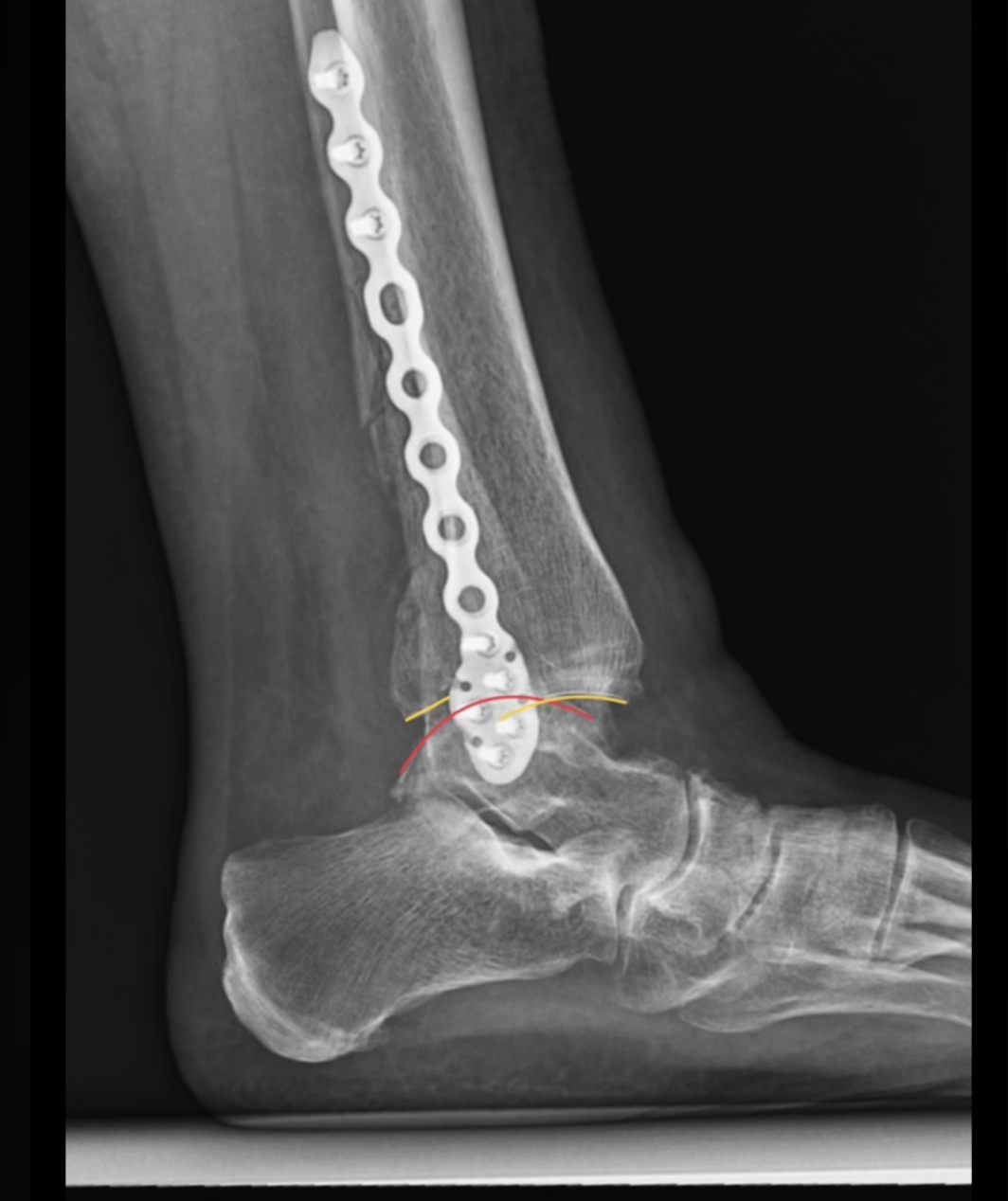
Low-energy posterior pilon fracture-dislocation of the ankle
This is the case of an older patient who sustained a low-energy posterior #pilon fracture-dislocation of the ankle. The ankle was reduced in the ER and splinted. She was treated with open reduction and internal fixation, including the posterior distal tibia. The fibula was fixed with bridge fixation due to comminution. The tibia was fixed with posterior-to-anterior #TTFNs from OSSIO through an #MPM approach. After fixation, the external rotation stress was negative.
At her first post-op, they were noted to be dislocated again. Upon questioning, they reported using the leg for standing and transferring in the splint, despite post-op non-weight-bearing restrictions. With these small fragments, in hindsight I could’ve used #antiglide plates.
Since the joint was dislocated for an unknown amount of time, the decision was made to sacrifice the joint and allow for earlier weight-bearing with a load-sharing implant.
One of the uncommon benefits of OSSIO fixation is in the face of revision. Due to the nature of #Ossiofiber, I was able to drill and ream through the material without need for removal for preparation of the hindfoot nail. Therefore, a small anterior approach and small sinus tarsi approach were used for joint prep.
Texas Orthopaedic Associates - A Division of OrthoLoneStar
Comments (1)
Sign in to join the conversation.
Sign in to commentInteresting case